What is non-conforming equipment?
A piece of radio equipment is deemed non-conforming when it does not meet a certain set of requirements, the so-called “essential requirements”:
- protection of the health and safety of the user and of any other person;
- protection regarding electromagnetic compatibility. Electromagnetic compatibility is an equipment’s capacity to operate without producing electromagnetic perturbation which could hinder the smooth operation of other equipment functioning nearby
- efficient use of the radio spectrum, in order to avoid harmful interference.
Electromagnetic perturbation: electromagnetic phenomena that can degrade the equipment operation (such as, including, electromagnetic noise, unwanted emissions or an alteration of the propagation environment itself).
Harmful interference: interference that, in any way, seriously and repeatedly alter, obstruct, or interrupt a radiocommunications service – that operates in compliance with the international, EU or national legal provisions – or jeopardizes / determines a substantial degrading of the functioning parameters of a radio-navigation service or of other radiocommunications services, including life safety-related ones.
The essential requirements are provided in the EU legislation, i.e. in the legislative package regarding product safety and conformity – the New Legislative Framework –, transposed in the national legislation by each EU Member State. Further details are available on ANCOM’s website here and here, for the directives under the New Legislative Framework corresponding to the communications domain.
A key-indicator of a product’s (hence, an equipment’s) conformity with the EU legislation, an indicator which enables the free circulation of an equipment within the EU is the marking. An equipment commercialized on the EU market and used within the EU – in any of the EU Member States, including Romania – without an adequate marking is deemed as non-conforming by default.
Why are DECT 6.0 fixed telephone terminals non-conforming?
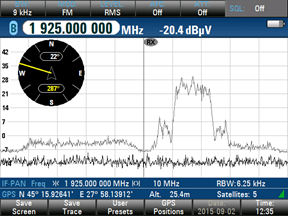
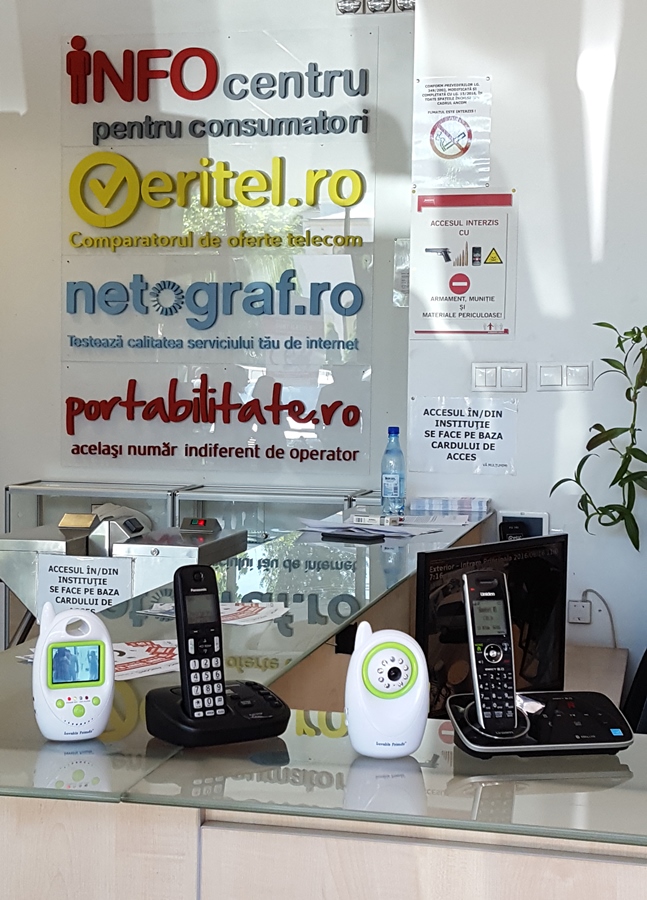
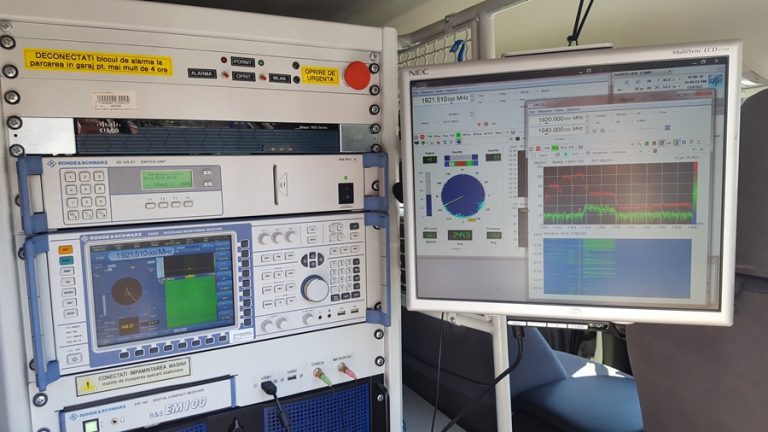
DECT 6.0 fixed telephone terminals purchased outside the EU are among the types of equipment the most frequently found to produce harmful interference.
DECT is the abbreviation of Digital Enhanced Cordless Telecommunications. The DECT standard was initially developed in Europe, as a universal standard for short-distance wireless, for which the 1880-1900 MHz band was allocated. The standard DECT 6.0 is used only in USA, Canada and in some areas in Asia, where it is allocated a different frequency band, i.e. 1920-1930 MHz.
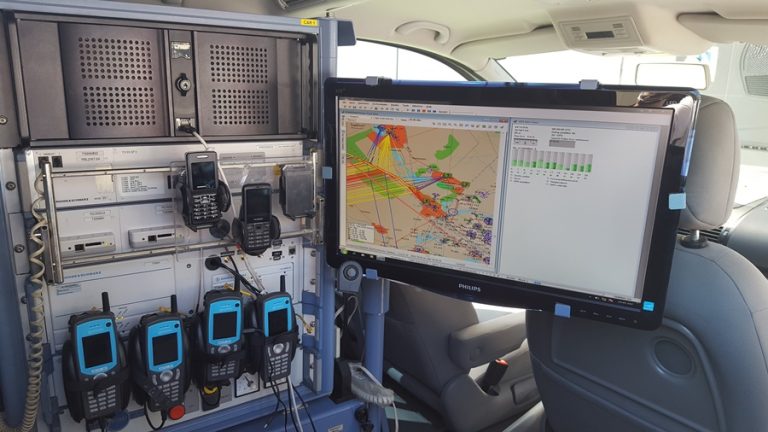
Therefore, at present, anybody using such telephone models that are not conforming to the European DECT standard within the EU produces harmful interferences on other radiocommunications services that legally operate in the respective frequency band. Moreover, the most important harmful interferences are produced on the 3G frequency bands allocated at the European level, so the use of DECT 6.0 telephones is incompatible with the functioning of 3G mobile telephony services.